



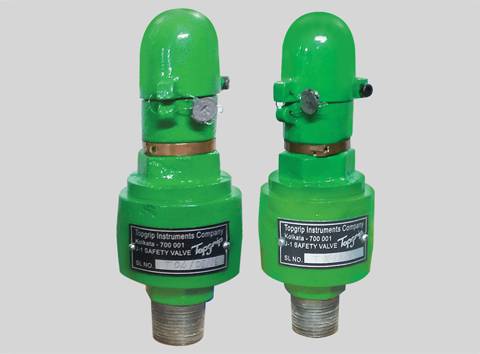
The J-1 Safety Valve is a pressure-relief / safety valve fitted on the main air-reservoir (MR) of a locomotive’s compressed-air system.
It is installed vertically on the main reservoir (or at a suitably accessible point in the reservoir piping) so that if the air pressure in the main reservoir exceeds safe limits, the valve will “blow off” — venting air to atmosphere — to protect the reservoir and piping from over-pressure.
Main Purpose of J-1 Safety Valve
The J-1 Safety Valve is used to protect the brake system from excessive air pressure by automatically releasing extra pressure when it exceeds the safe limit.
Key Functions of J-1 Safety Valve
| Function | Description |
| Prevents Over-Pressure | Releases excess compressed air automatically when system pressure exceeds the safe limit. |
| Protects Air Brake Components | Avoids damage to pipes, hoses, brake valves and reservoirs due to high pressure. |
| Ensures Safe Operating Pressure | Maintains pressure within a fixed calibrated range for reliable brake performance. |
| Acts as a Pressure Relief Device | Works as a safety outlet to vent air and balance pressure in the braking circuit. |
| Enhances Brake System Reliability | Stable pressure ensures consistent response of A9, SA9, C2N, Auto Drain, MU2B etc. |
| Fail-safe Operation | Functions automatically without driver involvement — activates only when needed. |
| Prevents Burst or Leakage Failure | Stops system stress and material fatigue caused by excessive pressure buildup. |