



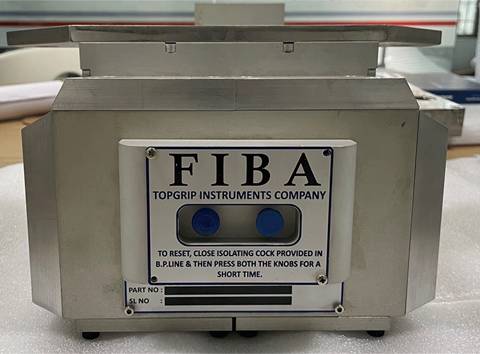
It is a safety device used in passenger coaches with air suspension that automatically applies the brakes if the air suspension system fails, preventing unsafe operation.
Why FIBA is Needed — Safety Purpose
Air-sprung coaches use compressed-air bellows (air springs) for suspension. If an air-spring fails or leaks (bellow rupture or pressure loss) for any reason — due to damage, wear, leak — that bogie becomes unsafe. The coach may tilt, derail or produce instability at speed.
Hence, FIBA acts as a fail-safe:
- It senses pressure drop in any air-spring bellow of a bogie.
- Upon detecting unsafe air-spring pressure (below threshold), it automatically triggers brake application — by dumping brake-pipe pressure — causing the entire train to brake and stop.
- It also provides a visual and audible indication (indicator light + hissing sound) so loco-pilot/crew know exactly which bogie/coach has failed suspension.
How FIBA Works – Principle & Operation
- FIBA works on a pure pneumatic circuit — no electrical power required.
- It continuously monitors pressure in each air-spring bellow of a bogie via sensor valves.
- If pressure in any one or both bellows drops below a preset threshold (nominally ~ 1.0 kg/cm² ± 0.1) the device triggers.
- On trigger, FIBA vents the Brake Pipe (BP) — i.e. dumps BP pressure to atmosphere — causing automatic brake application in the entire train (full-service brake).
- Simultaneously, indicator(s) on coach sidelines change color (often to red) + hissing sound gives clear warning of failure.
- For recovery: The crew can isolate the FIBA branch (via isolating cocks), stop the BP venting, isolate the faulty air-spring line, and then — under restricted speed — move the train to yard.
FAQ’s
What is the purpose of FIBA – (Failure Indication cum Brake Application)?
A FIBA device, used mainly in train coaches equipped with air spring suspension systems, such as LHB or EMU/DEMU coaches, has two purposes:
- To detect air-spring failure (like ruptures or rapid air loss).
- Automatically apply the brakes when such failures occur.