



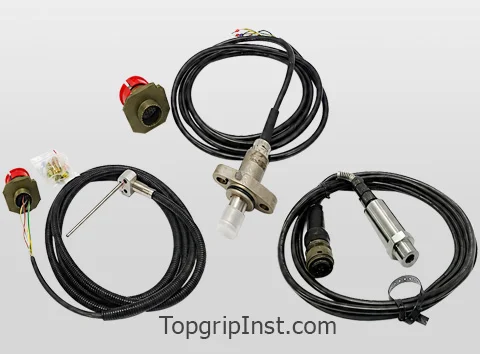
Main Purpose of a Pressure Sensor
The main purpose of a pressure sensor is to measure the amount of pressure exerted by gases or liquids and convert it into a readable output for monitoring and control.
Key Functions of Pressure Sensor
- Pressure Detection
- Senses the pressure of gases, liquids, steam, or hydraulic medium.
- Measures gauge, absolute, or differential pressure depending on the application.
- Conversion into Usable Output
- Converts the sensed pressure into a measurable output (digital/analog).
- Used for display on monitoring instruments or electronic control units.
- Real-Time Monitoring
- Continuously monitors pressure variations during system operation.
- Helps operators know the exact pressure at any moment.
- Input to Control & Automation Systems
- Feeds data to controllers like PLC, microcontrollers, ECU, etc.
- Used for automatic regulation of pumps, valves, compressors, brakes, or engines.
- Safety & Protection
- Helps trigger alarms or shutdown systems if pressure exceeds limits.
- Prevents accidents, system damage, or failure due to over/under pressure.
- Data Recording and System Diagnostics
- Supports fault analysis and performance monitoring.
- Assists in preventive maintenance and trend analysis.