



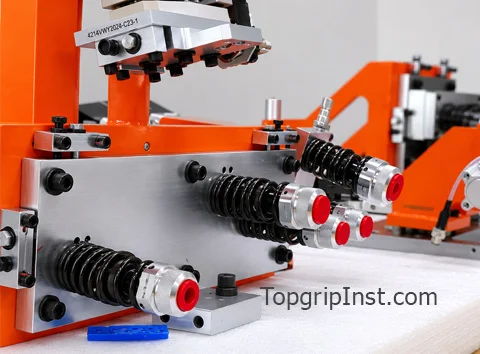
Main purpose of Sealing Unit
- To prevent leakage of fluids or gases
- Ensures no medium escapes from joints, shafts, pipes, or housings.
- To maintain required pressure inside the system
- Helps sustain hydraulic or pneumatic pressure for proper functioning.
- To protect internal components from contaminants
- Blocks dust, dirt, moisture, and foreign particles from entering the system.
- To reduce wear and increase component life
- Enhances durability of bearings, rotors, and mechanical parts by minimizing friction and exposure.
- To ensure efficiency and safety
- Prevents fluid loss, protects equipment, and reduces risk of malfunction or failure.
- To maintain controlled lubrication
- Keeps lubricants inside while preventing external contamination.
Key Functions of Sealing Unit
- Leak Prevention
- Stops the escape of fluids or gases from joints, housings, shafts, or pipelines.
- Pressure Retention
- Maintains required operating pressure in hydraulic, pneumatic, or fluid systems.
- Contaminant Exclusion
- Blocks dust, moisture, and foreign particles from entering the system.
- Lubrication Control
- Keeps lubricant inside the assembly while preventing contamination from outside.
- Friction and Wear Reduction
- Provides smooth contact surfaces and reduces mechanical wear between moving parts.
- Heat and Vibration Resistance
- Absorbs minor vibrations and withstands operating temperature changes.
- Improved Component Life
- Enhances overall durability and reliability of machines by protecting internal parts.
- Safety and System Efficiency
- Prevents fluid loss, reduces maintenance needs, and keeps equipment functioning safely and efficiently.